

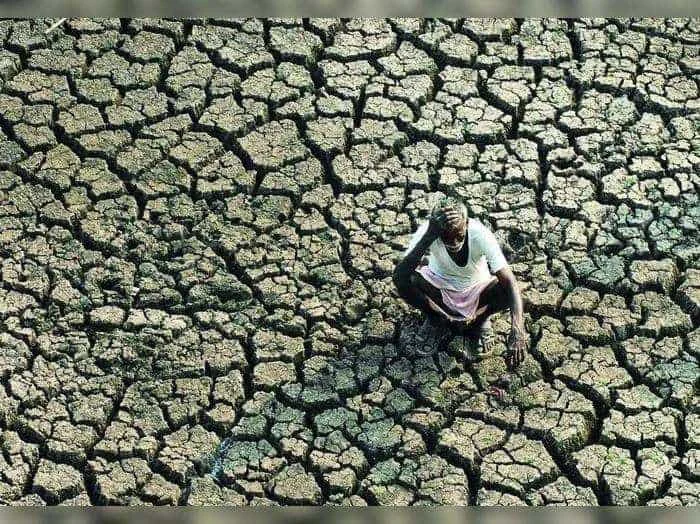
Nagpur/Amravati: Drought has been officially declared and relief measures have been announced, but for thousands of farmers in Vidarbha, the battle for survival remains as desperate as ever. A deeply disturbing picture of the agrarian crisis has emerged, with as many as 155 farmers dying by suicide across the region’s 11 districts during the month-and-a-half period covering October and the first 16 days of November, coinciding with the Dussehra-Diwali festive season.
The figures expose the grim disconnect between government declarations of assistance and the ground realities confronting indebted farming families. Of the 155 suicides, 127 were reported in October alone, while another 28 farmers ended their lives during the first 16 days of November. The relentless deaths underline how drought, crop losses, mounting debts and escalating cultivation costs have pushed farmers into an increasingly desperate situation.
Yavatmal, Amravati and Wardha have emerged as the worst-affected districts. Even more alarming is the situation in Amravati division, where a farmer is reportedly dying by suicide every eight hours, highlighting the extraordinary intensity of the agrarian distress in the region.
The Maharashtra Government declared drought on October 14, covering 108 talukas in Vidarbha. The announcement had raised hopes of financial relief for farmers struggling with crop failures and mounting liabilities. However, the subsequent suicide figures have exposed the limited impact of the government’s intervention. The crisis continued unabated even during Diwali, when farming families were expected to celebrate the festival.

Amravati division witnessing a suicide every eight hours
The situation in Amravati division is particularly alarming. Its five districts have recorded an average rainfall deficit of 31%, with Amravati district facing the highest shortfall of 44%.
A prolonged dry spell in August severely disrupted the Kharif season, damaging crops and leaving farmers unable to recover even their cultivation costs. With investments in seeds, fertilisers, pesticides and labour failing to generate adequate returns, thousands of cultivators were pushed deeper into debt.
The scale of the crisis is reflected in the rising monthly figures. As many as 85 farmers reportedly died by suicide in September, but the number climbed sharply to 96 in October alone in the Amravati division, according to the reported statistics.
The situation has now become a serious test of the government’s drought-management machinery, particularly when farmers are confronting successive crop failures and uncertainty over their next agricultural cycle.
Rabi season also under threat
The crisis is no longer confined to the Kharif crop. With inadequate moisture remaining in the soil following the deficient monsoon, the Rabi season has also become increasingly uncertain. Rain-dependent farmers are particularly vulnerable, as many are unable to undertake fresh sowing without sufficient soil moisture.
The coming months could bring additional hardships, including drinking-water shortages and an acute scarcity of fodder for livestock. For families already struggling to repay loans and meet household expenses, the prospect of another failed agricultural season threatens to deepen the economic catastrophe.
Serious questions are also being raised about the reach and effectiveness of government agricultural welfare schemes. Deficiencies in the MahaDBT system, inadequate benefits under the crop insurance scheme and the performance of the Late Vasantrao Naik Sheti Swavalamban Mission, established for 14 suicide-prone districts, have come under scrutiny.
Farmers’ organisations allege that the intended beneficiaries are being left out even as government departments continue to publicise relief initiatives.
‘This drought is different from the 1972 catastrophe’
Agricultural expert Vijay Jawandhia warned that the present drought is fundamentally different from the devastating drought of 1972.
“The Kharif crop has been lost, and farmers may not even be in a position to cultivate Rabi crops. The biggest question confronting farmers and agricultural labourers is how they will survive throughout the year,” he said.
Jawandhia expressed concern that the ruling establishment was failing to appreciate the seriousness of the situation, warning that the agrarian crisis could assume even more devastating proportions in the coming months.
Farmer leader Ravikant Tupkar from Buldhana also questioned the effectiveness of the announced relief measures.
“Although drought has been declared, the actual benefits of the announcements have barely reached farmers. Many eligible cultivators remain deprived of assistance. Meanwhile, loan recovery by private finance companies has not stopped,” he pointed out.
Yavatmal tops farmer suicide tally
Yavatmal continues to hold the grim distinction of recording the highest number of farmer suicides in Maharashtra. During the first 10 months of the year, 235 farmers in the district reportedly died by suicide.
The continuing deaths have brought renewed attention to the inadequacy of the existing support mechanism for distressed farming families. Despite repeated government announcements, farmers continue to demand timely crop insurance compensation, a halt to coercive loan recovery and remunerative prices for their agricultural produce.
Rs 1 lakh compensation unchanged for 18 years
The inadequacy of financial assistance provided to families of farmers who die by suicide has also become a major concern.
Under the existing government provision, the affected family receives compensation of Rs 1 lakh. Of this amount, Rs 30,000 is paid in cash, while the remaining Rs 70,000 is deposited as a fixed deposit for six years.
Shockingly, this compensation structure has remained unchanged for the past 18 years, despite the substantial rise in cultivation costs, household expenditure and the overall cost of living.
Worse, outstanding agricultural loans continue to remain a burden on the legal heirs of deceased farmers, further complicating the financial survival of already shattered families.
The mounting death toll raises uncomfortable questions about the effectiveness of successive drought-relief packages, agricultural insurance mechanisms and farmer welfare schemes. When 155 farmers lose their lives within just 45 days despite an official drought declaration and assurances of assistance, the issue goes far beyond statistics. It points to a deepening agrarian emergency in which government announcements are failing to translate into meaningful relief on the ground.
For Vidarbha’s farming community, the immediate question is no longer merely how to save the next crop, but how to survive until the next harvest.