 Nagpur: The Union Budget 2026–27 presented by Union Finance Minister Nirmala Sitharaman has drawn a mixed but largely constructive response from Nagpur’s business and trade bodies, with industry leaders welcoming GST reforms, MSME support and infrastructure push, while flagging concerns over higher Tax Collected at Source (TCS) on scrap and minerals.
GST Clarity Brings Relief to Traders
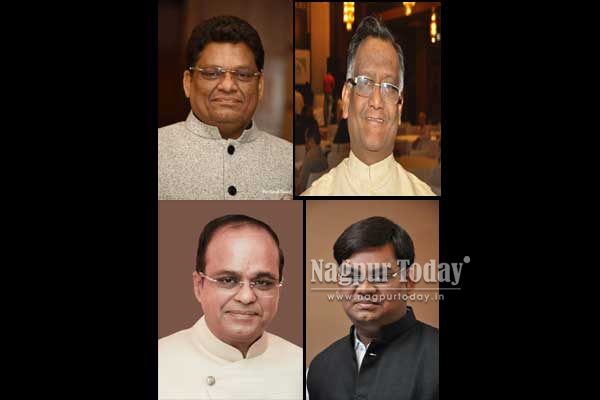
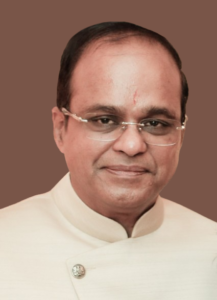 Reacting to the Budget, Sanjay K Agrawal, President of the Steel & Hardware Chamber of Vidarbha, said the proposals mark a decisive step toward simplifying GST compliance and resolving long-pending ambiguities under the CGST and IGST framework.
He welcomed the move to remove the rigid requirement of pre-existing agreements for post-sale discounts and the alignment of valuation adjustments with credit notes and corresponding ITC reversals, calling it a practical reform that reflects real-world trade practices.
Gold Rate
Mar 17 2026 - Time 10.23Hrs

According to Agrawal, this change is expected to significantly reduce litigation arising from technical denial of discounts. He also highlighted that extending provisional refunds to cases of inverted duty structure would provide much-needed cash-flow relief to manufacturers facing rate inversion, reinforcing confidence in a more predictable and taxpayer-friendly GST regime.
Industry Flags TCS Hike on Scrap and Minerals
 However, concerns were raised over the proposal to increase TCS from 1% to 2% on scrap and minerals such as coal, lignite, and iron ore.
Mukul Agrawal, Secretary of the Steel & Hardware Chamber of Vidarbha, warned that these sectors operate on thin margins and high volumes, and the hike could lead to serious working capital blockage—especially for MSMEs and secondary steel manufacturers.
He noted that while TCS is only an advance tax, the increase would escalate financing costs without generating meaningful additional revenue for the government. The Chamber has urged the Finance Minister to reconsider the move to avoid placing undue financial pressure on recycling, trade, and manufacturing activities.
CAMIT Welcomes Growth-Focused Roadmap
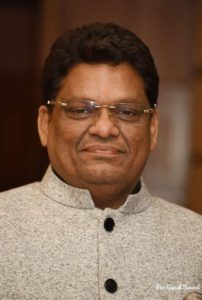 Meanwhile, Dr Dipen Agrawal, President of the Chamber of Associations of Maharashtra Industry & Trade (CAMIT), termed Budget 2026–27 a forward-looking and strategic roadmap aimed at sustaining growth in a challenging global environment.
He praised the continued thrust on capital expenditure, manufacturing, and MSME development, stating that the Budget clearly outlines the government’s intent to strengthen India’s competitiveness while generating employment. He also welcomed higher public investment in infrastructure, new freight corridors, high-speed rail projects and national waterways, calling them critical for reducing logistics costs and improving industrial productivity.
CAIT Backs “Yuva Shakti” Push and MSME Financing
 Adding to the reactions, B C Bhartia, National President of the Confederation of All India Traders, described Budget 2026 as bold and visionary, saying it reflects the commitment of Prime Minister Narendra Modi to position India among the world’s strongest economies.
Bhartia said the “yuva shakti–driven” Budget would boost self-employment and help kickstart the economy from the grassroots level. He also welcomed the emphasis on attracting foreign investment while promoting exports across sectors, noting that these measures would support a stronger rupee.
Highlighting MSME-focused reforms, Bhartia said the increased focus on loans and bill discounting would significantly aid small businesses by improving liquidity and accelerating enterprise growth.