
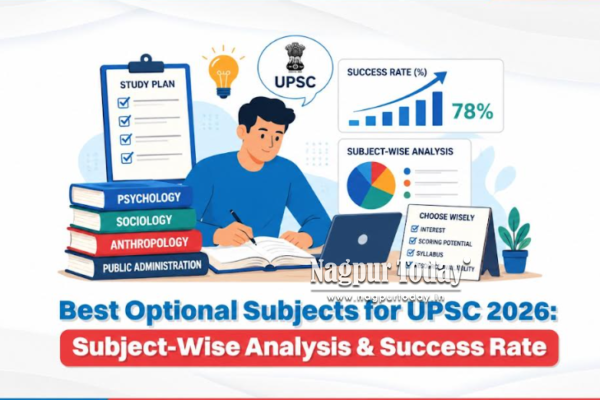
The UPSC Mains exam carries 1750 marks in written papers. Of these, 500 marks (two papers of 250 marks each) come from your optional subject. A well-chosen optional can give you a 50–70 mark advantage over competitors. Choosing the right optional subject is arguably the single most smartest decision a UPSC aspirant makes. With over 48 subjects available in the UPSC optional subjects list, choice can feel paralyzing, yet it is this one decision that separates toppers from repeat-attempt candidates. To identify the best optional subject to help Civil Services aspirants crack this prestigious exam, it is necessary to evaluate factors such as academic background, interest in the subject, availability of study material, and the subject’s scoring trends over the years.
 UPSC Optional Subject Comparison Chart 2026
To help aspirants select the best UPSC optional 2026, here’s a detailed comparison table that needs to be looked at:
| Subject | Category | Papers | Max Marks | Key Areas Covered |
| Agriculture | Humanities | 2 | 500 | Agronomy, soil science, crop production, agri economics |
| Animal Husbandry & Veterinary Science | Science & Tech | 2 | 500 | Animal nutrition, genetics, livestock management, diseases |
| Botany | Engineering | 2 | 500 | Cell biology, genetics, plant ecology, physiology, taxonomy |
| Chemistry | Science & Tech | 2 | 500 | Organic, inorganic, physical chemistry, spectroscopy |
| Civil Engineering | Engineering | 2 | 500 | Structural engineering, fluid mechanics, geotechnics, construction |
| Commerce & Accountancy | Social Sciences | 2 | 500 | Financial accounting, auditing, business management, taxation |
| Economics | Social Sciences | 2 | 500 | Micro/macro economics, Indian economy, international trade, stats |
| Electrical Engineering | Engineering | 2 | 500 | Circuit theory, control systems, power systems, electronics |
| Geography | Humanities | 2 | 500 | Physical geography, human geography, geomorphology, cartography |
| Geology | Social Sciences | 2 | 500 | Mineralogy, petrology, structural geology, stratigraphy |
| History | Humanities | 2 | 500 | Ancient, medieval, modern Indian history, world history |
| Law | Social Sciences | 2 | 500 | Constitutional law, IPC, international law, jurisprudence |
| Management | Humanities | 2 | 500 | Organisational behaviour, HRM, finance, marketing, strategy |
| Mathematics | Science & Tech | 2 | 500 | Linear algebra, calculus, real analysis, numerical analysis, stats |
| Mechanical Engineering | Engineering | 2 | 500 | Thermodynamics, fluid mechanics, manufacturing, machine design |
| Medical Science | Science & Tech | 2 | 500 | General medicine, surgery, obstetrics, preventive medicine |
| Philosophy | Humanities | 2 | 500 | Indian philosophy, Western philosophy, ethics, political thought |
| Physics | Science & Tech | 2 | 500 | Mechanics, electrodynamics, quantum mechanics, thermodynamics |
| Political Science & IR | Social Sciences | 2 | 500 | Political theory, Indian politics, comparative politics, IR |
| Psychology | Social Sciences | 2 | 500 | Cognitive, social, developmental, and abnormal psychology |
| Public Administration | Social Sciences | 2 | 500 | Administrative theory, Indian administration, development admin |
| Sociology | Social Sciences | 2 | 500 | Sociological thinkers, Indian society, social change, institutions |
| Statistics | Science & Tech | 2 | 500 | Probability, statistical inference, sampling, linear models |
| Zoology | Science & Tech | 2 | 500 | Animal diversity, cell biology, genetics, ecology, evolution |
| Assamese | Humanities | 2 | 500 | Literature, grammar, history of language, prose & poetry |
| Bengali | Humanities | 2 | 500 | Literature, grammar, history of language, prose & poetry |
| Bodo | Humanities | 2 | 500 | Literature, grammar, history of language, prose & poetry |
| Dogri | Humanities | 2 | 500 | Literature, grammar, history of language, prose & poetry |
| Gujarati | Humanities | 2 | 500 | Literature, grammar, history of language, prose & poetry |
| Hindi | Humanities | 2 | 500 | Literature, grammar, history of language, prose & poetry |
| Kannada | Humanities | 2 | 500 | Literature, grammar, history of language, prose & poetry |
| Kashmiri | Humanities | 2 | 500 | Literature, grammar, history of language, prose & poetry |
| Konkani | Humanities | 2 | 500 | Literature, grammar, history of language, prose & poetry |
| Maithili | Humanities | 2 | 500 | Literature, grammar, history of language, prose & poetry |
| Malayalam | Humanities | 2 | 500 | Literature, grammar, history of language, prose & poetry |
| Manipuri | Humanities | 2 | 500 | Literature, grammar, history of language, prose & poetry |
| Marathi | Humanities | 2 | 500 | Literature, grammar, history of language, prose & poetry |
| Nepali | Humanities | 2 | 500 | Literature, grammar, history of language, prose & poetry |
| Odia | Humanities | 2 | 500 | Literature, grammar, history of language, prose & poetry |
| Punjabi | Humanities | 2 | 500 | Literature, grammar, history of language, prose & poetry |
| Sanskrit | Humanities | 2 | 500 | Literature, grammar, history of language, prose & poetry |
| Santhali | Humanities | 2 | 500 | Literature, grammar, history of language, prose & poetry |
| Sindhi | Humanities | 2 | 500 | Literature, grammar, history of language, prose & poetry |
| Tamil | Humanities | 2 | 500 | Literature, grammar, history of language, prose & poetry |
| Telugu | Humanities | 2 | 500 | Literature, grammar, history of language, prose & poetry |
| Urdu | Humanities | 2 | 500 | Literature, grammar, history of language, prose & poetry |
| English | Humanities | 2 | 500 | Literature, grammar, history of language, prose & poetry |

Top UPSC Optional Subject Success Rate Summary Table
While preparing the UPSC study plan 2026, you must include the optional subject that aligns with your interests and has a high success rate.
| Optional Subject | Approx. Success Rate | Scoring Potential | GS Overlap |
| Anthropology | 8-11% | High | Moderate |
| Sociology | 8-10% | High | High |
| Geography | 8-10% | High | Very High |
| PSIR | 7-9% | Moderate-High | Very High |
| History | 6-8% | Moderate | Very High |
| Public Administration | 6-8% | Moderate | Very High |
| Mathematics | 5% overall | Very high | Low |
How to Choose Optional Subjects with the highest selection rate in UPSC?
Looking at the previous years’ subject-wise analysis, it is pretty much clear to go with that optional paper that overlaps with other GS papers. Doing it this way would be helpful in not putting in extra effort while preparing for the optional. For most working UPSC aspirants, subjects like Sociology or PSIR tend to work better, not because they’re easy, but because they’re more manageable. It is a subject for which you don’t need hours; you can manage to read, understand, and revise in shorter cycles. The following are the key parameters that are quite significant in evaluating any optional:
- Scoring potential: With your chosen optional subject, how high can you realistically score?
- Success Rate: Analyze the previous years’ trends, like how many candidates selecting the particular subjects actually clear the Mains.
- GS overlap: Does your optional subject choice complement your General Studies preparation?
- Availability of resources: Quality coaching, standard books, and previous year papers play a key role in selecting the right optional subject.
- Interest & background: Your graduation subject or genuine intellectual interests work excellently in choosing the best UPSC optional subject.
Best Books For UPSC 2026 That You Can Trust!
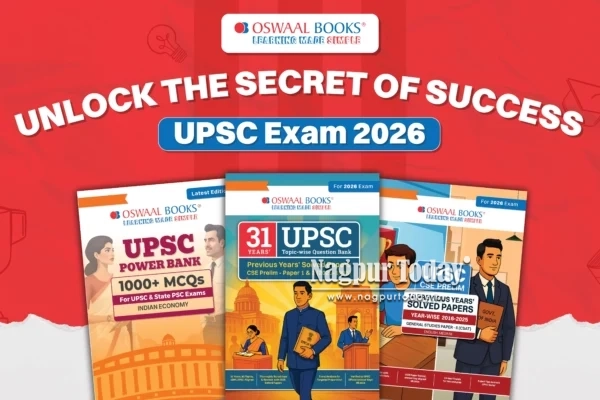
UPSC preparation 2026 strategy must include reliable resources such as Oswaal Books that offer well-structured, exam-focused UPSC Mains books designed to build strong concepts, provide ample practice, and enhance answer-writing skills. In the collection, you can expect books on subjects like Indian Polity, Modern History, Indian Economy, NCERT books for UPSC (NCERT One For All), 31 Years’ Previous Years Solved Papers, Power Bank, and more. These learning resources are equipped with the following exclusive features:
- 100% Concept Clarity: Oswaal’s collection of best books for UPSC includes detailed, easy-to-understand explanations to ensure conceptual clarity.
- Latest NCERT Coverage: Oswaal NCERT One For All is aligned with all new chapters and changes from the latest NCERT textbooks, ensuring complete syllabus coverage.
- Mix of Old & New NCERT Editions: Our subject matter experts have thoughtfully curated content that combines the most important topics from both NCERT editions, ensuring no important topic is missed.
- 1500+ Practice MCQs: Extensive question bank including moderate, advanced, and previous-year questions to strengthen exam readiness.
- Easy-To-Read NCERT Summaries: Oswaal geography 6 to 12 NCERT book, general science book for UPSC, and others, include crisp, chapter-wise revision notes effective for quick learning.
- PYQs as One-Liners: Our UPSC exam book sets offer past exam questions as quick one-liners, perfect for rapid retention.
- Quick Glossary of Key Terms:Important terms, concepts, and keywords compiled in a quick glossary to help aspirants revise efficiently before exams.
Final Thoughts
Before making a final call on the UPSC Optional subject, you must sit with yourself, look for your interest areas, academic background, and previous year trend analysis. Including the best UPSC MCQ’s books 2026, like those of Oswaal, in your study routine proves to best move you can take for yourself. It will help you understand which subject aligns with your strengths, improves your answer-writing approach, and enhances your overall performance in the examination.
All in all, it is suggested to choose that optional subject which can make your learning journey smooth and enjoyable. Don’t get into the trap of peer pressure or what your so-and-so relative has said to choose the same.
Use your wits to understand your strengths, interests, and limitations, and then make a choice you can stay consistent with. At the end of the day, it’s not the “popular” optional but the one you can revise, understand, and stick to even on your low days that matters the most.
FAQs
Q1. Which optional subject is easiest to score above 300 out of 500 in UPSC?
Anthropology and Sociology consistently top the scoreboard with a success rate of 8-11%.
Q2. Is Geography a good optional for UPSC 2026?
Absolutely, both science and arts graduates can opt for this subject as it is one of the most suggested optional subjects due to its very high GS overlap and consistent scoring record.
Q3. Can an engineering student choose Sociology or History as optional?
Absolutely. UPSC has no restriction on optional choice based on graduation background.
Q4. How much time does optional preparation take?
For most subjects, 4–6 months of dedicated preparation (covering both papers, PYQs, and test series) is sufficient. Mathematics may require 6–8 months for those without a recent academic background.
Q5. Should I choose the same optional as my graduation subject?
It is advisable but not mandatory. Familiarity reduces the learning curve, but passion and resource availability are more important for long-term consistency.
Q6. Is PSIR a good optional for UPSC 2026?
Yes, especially for aspirants strong in current affairs and analytical writing. Its overlap with GS Paper 2 and Essay is exceptional, making it time-efficient.