

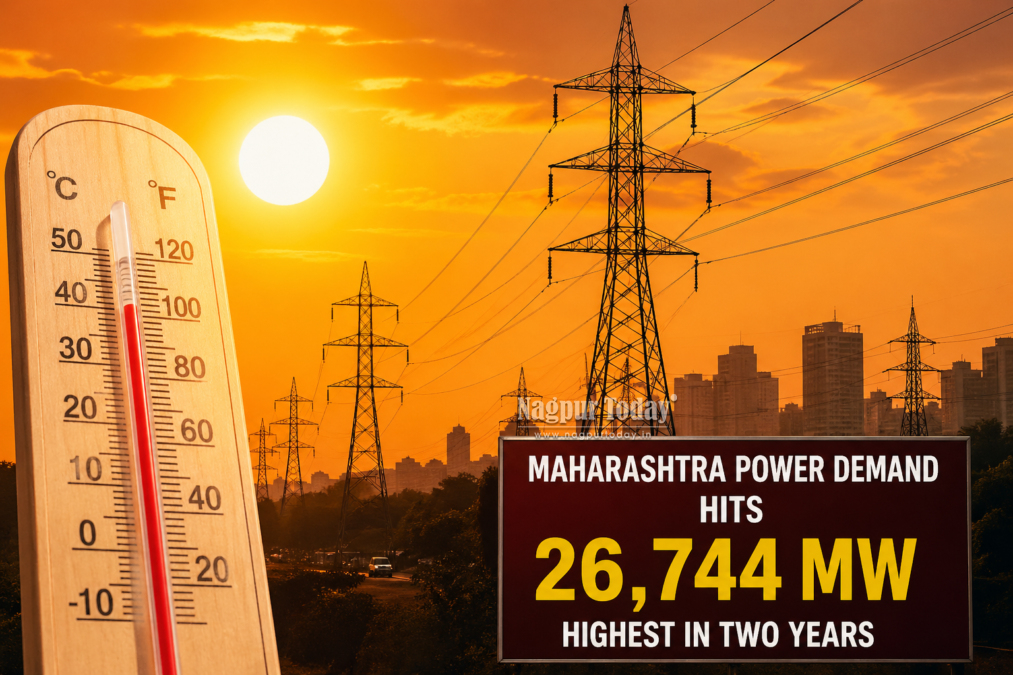
Nagpur: A relentless heatwave sweeping across Maharashtra has triggered an unprecedented surge in electricity consumption, placing immense pressure on the State’s power infrastructure. The peak demand touched 26,744 MW on April 18, the highest recorded during the summer season in the past two years, raising concerns over the stability of the distribution network.
Officials from Maharashtra State Electricity Distribution Company Ltd (MSEDCL) confirmed that the spike reflects a sharp rise in cooling requirements as temperatures soar across regions, particularly in Vidarbha, where mercury levels have crossed 45°C in several cities.
Gold Rate
Apr 272026 - Time 10.30Hrs

A comparison with previous years underscores the growing strain. In April 2025, peak demand stood at 26,012 MW, followed by 25,230 MW in May. In contrast, 2024 recorded relatively lower figures, with 24,775 MW in April and 24,146 MW in May. The steady upward trend signals increasing dependence on air conditioners, coolers, and other power-intensive appliances during extreme weather conditions.
The surge has not come without consequences. Multiple parts of the state have reported frequent tripping incidents, equipment failures, and localized outages. Officials attribute these disruptions to a combination of factors, overheating transformers, ageing infrastructure, and excessive load on the system.
To tackle the crisis, MSEDCL has rolled out emergency measures, including deploying air-cooling mechanisms for transformers and intensifying preventive maintenance drives in high-risk zones. However, despite these interventions, many consumers continue to face intermittent power cuts, particularly during peak hours.
In a bid to reduce inconvenience, the utility has revised its maintenance schedule. Divisions have been instructed to carry out repair and upkeep work between 7 am and 11 am, replacing the earlier extended window that often stretched into the afternoon. The move is aimed at minimizing prolonged outages during the most unbearable hours of the day.
With forecasts indicating sustained high temperatures, officials warn that the power network will remain under stress in the coming weeks. The situation highlights not only the urgent need for infrastructure upgrades but also calls for responsible consumption to prevent further strain on the already stretched system.