

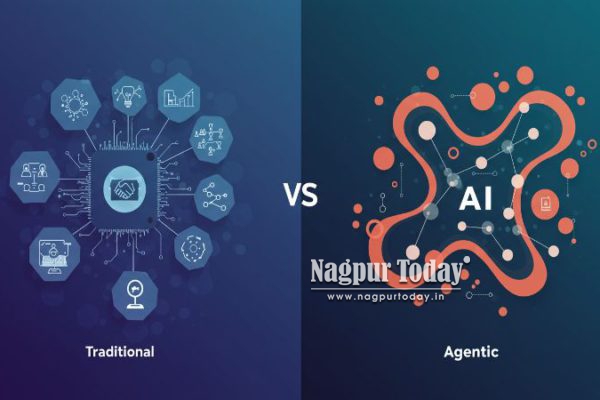
 The use of artificial intelligence in trading has moved from basic automation to systems that can adapt and make decisions with minimal human input. But not all AI works in the same way. There is a growing interest in moving from traditional rule-based models toward what is now being called agentic AI trading, although adoption is still evolving. Understanding this difference is important for anyone trying to build or evaluate a modern automated trading system.
What Does Traditional AI in Trading Look Like?
Traditional AI in trading is often built around predefined logic or models trained on historical data, combined with fixed execution rules. These systems rely on historical data, statistical models, and fixed rules to generate signals. For example, a model may be trained to predict price direction based on past patterns or execute trades when certain conditions are met.
In many cases, these systems are still dependent on human design. A trader decides the features, the model type, and the execution rules. Once deployed, the system follows its predefined logic without adapting dynamically unless retrained or updated.
Gold Rate
Apr 25 2026 - Time 10.30Hrs

This approach can work effectively in certain market conditions, particularly when underlying patterns remain relatively stable. It is widely used in building an automated trading system, where consistency and speed are important. However, it has limitations. Markets change, and models trained on past data may struggle when conditions shift.
The Rise of Agentic AI Trading
Agentic AI trading takes a different approach. Instead of just following rules, these systems act more like decision-makers. They can observe the environment, take actions, evaluate outcomes, and adjust their behavior over time.
An agentic system does not just execute trades. Within defined objectives and constraints, it can decide when to enter or exit, adjust strategy selection, and choose when to stay out of the market. This makes it more flexible compared to traditional models.
The key difference lies in autonomy. While traditional AI needs clear instructions, agentic AI works with goals. It tries to achieve an objective, such as improving risk-adjusted performance or managing risk under defined constraints, by continuously learning from feedback.
Core Differences That Matter in Practice
The difference between these two approaches becomes clearer when you look at how they operate in real scenarios.
Traditional systems are static once deployed. Even if they use machine learning, retraining is typically done offline or on a scheduled basis rather than continuously during live trading. Agentic systems, on the other hand, are designed to adapt in near real time, depending on data availability, infrastructure, and execution constraints.
Decision-making is another major difference. In traditional setups, decisions are triggered by signals. In agentic systems, decisions are part of a broader process that includes observation, reasoning, and action.
Risk handling also changes. A traditional automated trading system follows preset risk rules. An agentic system can adjust its exposure based on changing market conditions, although this flexibility requires careful constraints to avoid unintended risk escalation.
Where Traditional AI Still Works Well
Despite the rise of agentic models, traditional AI still has a strong place in trading. It is easier to build, easier to test, and easier to control.
For strategies that rely on well-understood patterns, such as mean reversion or trend following, traditional models can perform reliably. They are also preferred in environments where strict control and auditability are required.
Another advantage is transparency. Since the logic is predefined, it is easier to understand why a trade was taken. This is important for risk management and compliance.
Challenges with Agentic AI in Trading
While agentic AI trading sounds powerful, it comes with its own set of challenges. One of the biggest concerns is control. When a system makes decisions on its own, it becomes harder to predict its behavior in extreme situations.
There is also the issue of data and feedback. For an agent to learn effectively, it needs a well-defined environment, carefully designed reward functions, and reliable feedback signals, which can be difficult in markets with delayed and noisy outcomes. In financial markets, noise and randomness can make this difficult.
Testing is another challenge. Backtesting an agentic system is more complex than testing a rule-based model because the system’s behavior can evolve over time, making results path-dependent and harder to reproduce consistently. The system’s behavior may change over time, making results less stable.
How the Two Approaches Come Together
In practice, many trading systems use a combination of both approaches. Traditional models are used for signal generation, while agentic components handle decision-making and execution.
For example, a system may use a predictive model to identify opportunities while an agent manages position sizing, execution timing, or portfolio-level decisions based on changing conditions. This hybrid approach balances control with flexibility.
As the use of artificial intelligence in trading continues to grow, this combination is likely to become more common.
Success Story
Karthic Krishnan started his journey with an interest in finance, but sought a more structured way to apply his interest in trading. Over time, he explored data-driven approaches and began understanding how structured systems work in real markets. As he learned more about building and testing data-driven strategies, including machine learning-based approaches, his process became more methodical and structured. He focused on improving his understanding of models, data, and execution rather than chasing quick results. This gradual shift helped him move from basic concepts to a more structured approach, where decisions were based on tested models and data rather than assumptions.
Conclusion
The difference between traditional models and agentic AI trading is not just technical. It reflects a broader shift in how trading systems are designed. Traditional approaches focus on rules and control, while agentic systems focus on adaptability and decision-making.
Both have their place. A well-built automated trading system often combines elements of both to balance stability with flexibility. The key is not choosing one over the other, but understanding when each approach makes sense.
For those looking to explore these concepts in a more structured way, guided learning can help connect theory with practical implementation. Quantra courses include some free options for beginners starting with algo or quant trading, but not all courses are free. The learning format is modular and flexible, allowing learners to progress step by step. The focus is on learning by coding, which helps in building practical skills. The per course pricing allows learners to explore topics individually, and a free starter course is available for those beginning their journey.