
Synopsis: Through Ashok Leyland and SWITCH Mobility, Dheeraj Hinduja is turning his global vision into reality. With a presence in more than 50 countries, including Mauritius, the UK, the Middle East, Kenya, Sudan(South), Madagascar, Zambia, Chad, and many more the company has reached new heights in the mobility industry. Both the companies are moving with a vision of cleaner future.
Dheeraj Hinduja, Executive Chairman of Ashok Leyland and a key member of the Hinduja Family, has a long-standing and significant presence in India’s commercial vehicles space. In recent years, his ambitions have moved beyond the production of buses and trucks. For some time now, he has been moving the company into the world of clean mobility, with a key focus on scaling EV infrastructure for mass transit.
Globally, the automotive universe is undergoing an upheaval brought on by environmental pressures, government action and consumer demand. For Dheeraj Hinduja, this change is not about responding; it is about leading it. Ashok Leyland has enhanced its EV capabilities and capacity for developing leading-edge battery technology and has invested in the charging infrastructure to facilitate the introduction of electric buses in public transport.

EV Infrastructure as the Backbone of Mass Transit
The widespread adoption of EVs in public transport relies not only on producing electric buses, but also on having the supporting infrastructure in place. Dheeraj Hinduja’s plan identifies that charging stations, integration with the grid, and maintenance facilities need to be developed alongside vehicle production.
Ashok Leyland is developing modular, scalable charging solutions that will address the urban, intercity mass transport precisely. These are depot charging (in the case of fleet users) and fast charging locations along commuter routes. Dheeraj further aims to reduce the challenges encountered during operation by both the private transport operator travellers as well as corporations involved in transportation by promoting interoperability and ease of maintenance.
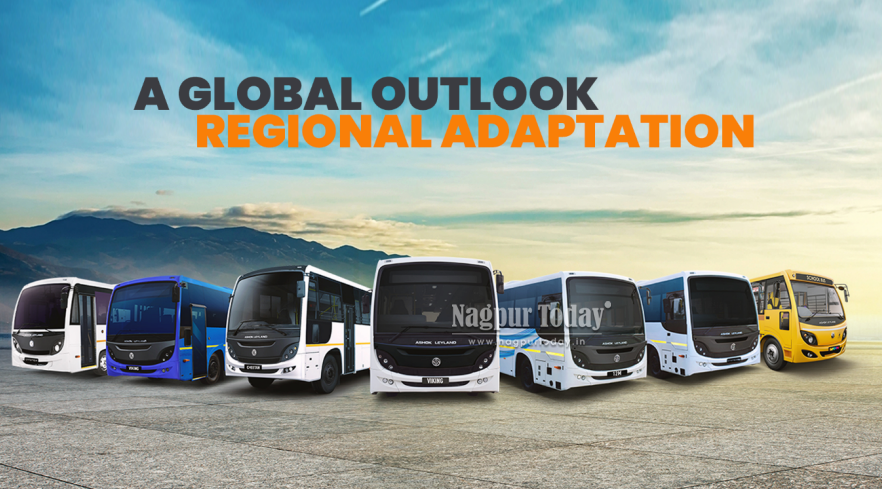
A Global Outlook with Regional Adaptation
Ashok Leyland is an Indian company, yet the way Dheeraj Hinduja thinks is dominated by the global vision. As the Hinduja Family, it has never been about building bridges across the markets, but rather cultures and industries and this spirit can also be felt in the company’s EV plans.
To illustrate, in the case of Sudan, Ashok Leyland has strategic partnership with the local distributor, Doshi Motors, in 2013 where they jointly assemble and distribute buses, which will be relevant to the local demand related to transport. This did not represent simply a market entrance, but the will of Hinduja to learn the local operative environment and subsequently customize the product accordingly, as it is required in the realm of EVs. There are a lot of markets where the grid retrofit reliability is not guaranteed such as Africa and we have been researching hybrid charging and renewable hybrid charges to provide a sustainable solution to electric mass transport.
Technology and Partnerships Driving the Transition
Collaboration has consistently been at the core of Ashok Leyland’s path to electric mobility. We have a variety of partnerships with technical partners, battery companies, and infrastructure developers to maximise our sales. As stated by Dheeraj Hinduja, “You cannot build an EV ecosystem as an independent actor… there should be an ecosystem between manufacturers, policymakers, service providers.”
We have also gone an extra step establishing battery lifetime control for several urban applications. Ultimately investing in battery-swapping models means to optimise run time for a vehicle by minimising or eliminating downtime, would aid the operator reaching a sustainable goal of service frequencies without facing a long lag in charging.
Sustainability Beyond Vehicles
For Dheeraj Hinduja, increasing EV infrastructure is an investment in sustainability and not a business model. Electric mass transportation has the potential to diminish the noise and air pollution that plagues a city and affects millions of commuters daily. However, Hinduja envisions more than that. He has continuously talked of the integration of renewable sources of energy into the charging network, the introduction of legislation favouring the use of public transport vehicles over personal property automobiles and streamlining its business expansion plans with India net clean energy plans.
Future endeavours
Dheeraj Hinduja is focusing on upshifting not only as the method of switching gears in the direction of his efforts but also as the method of gaining speed to the future where mass transit is sensible and available. He finds it very difficult to scale infrastructure and on the other hand, it is a strategic step. He sees the possibility of the charging stations powered by renewable power sources, especially those that provide electric bus fleets in the city to intercity routes.