
Nagpur: What began as a localised controversy in Nagpur’s Mankapur is fast snowballing into a high-stakes probe with wider ramifications, as investigators dig deeper into the alleged ‘corporate jihad’ case, a term used by complainants, now raising uncomfortable questions about funding channels, regulatory oversight, and possible systemic loopholes.
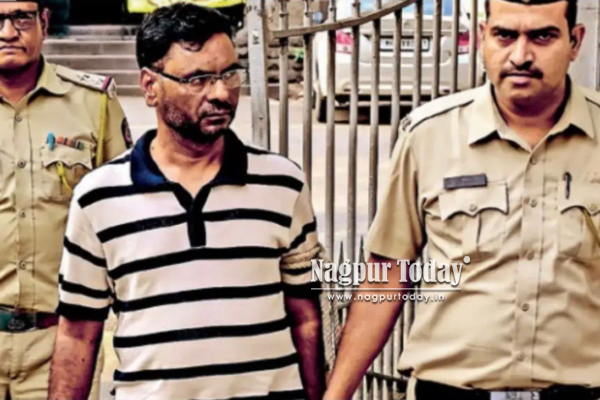
At the centre of the storm is the arrest of NGO Director Riyaz Fazil Qazi, but the investigation is no longer confined to allegations of foreign funding alone. Authorities are now examining whether the organisation may have also tapped into State and Central Government schemes, potentially diverting public funds, a development that, if established, could significantly escalate the gravity of the case.
Gold Rate
Apr 23 2026 - Time 10.30Hrs

Preliminary inputs suggest the NGO had financial links with both international and domestic entities, including a US-based foundation and a Bengaluru-based trust. However, what has triggered heightened concern is the possibility that official grants or institutional support mechanisms may have been accessed alongside these sources. Investigators are now tasked with tracing the complete money trail, from origin to utilisation, to determine whether funds were used in compliance with legal and declared objectives.
The case has quickly acquired a political dimension. The Bharatiya Janata Yuva Morcha (BJYM) has stepped in, submitting a formal memorandum to the police and demanding a time-bound, transparent probe. The organisation has called for a forensic audit of accounts, scrutiny of donor networks, and a full-scale examination of the NGO’s operational framework.
Adding another layer of controversy are fresh allegations flagged by BJYM leaders, claims that certain female employees linked to the NGO were allegedly subjected to coercion to follow specific religious practices. While these allegations remain unverified at this stage, they have intensified calls for victim protection and independent verification of testimonies.
In a significant move, a BJYM delegation met Naveenchandra Reddy, Joint Commissioner of Police, urging the constitution of a Special Investigation Team (SIT) to avoid any dilution of the probe. The demands also include safeguarding potential victims, identifying the alleged “mastermind” behind the operations, and establishing a dedicated helpline for similar complaints.
Police officials, while refraining from drawing premature conclusions, have maintained that the investigation is being handled with due seriousness. Sources indicate that multiple angles, financial, organisational, and criminal, are being examined simultaneously.
Yet, the case raises larger, more unsettling questions. Is this an isolated instance of alleged misconduct by a single organisation, or does it point to a broader, more organised network exploiting funding ecosystems and institutional gaps? Were oversight mechanisms bypassed, or did they fail to detect irregularities in time?
As investigators piece together financial records, digital evidence, and witness accounts, the answers may redefine the scope of the case. For now, the spotlight remains firmly on the unfolding probe, one that could expose not just individual culpability, but potential cracks in the systems meant to regulate and monitor such organisations.