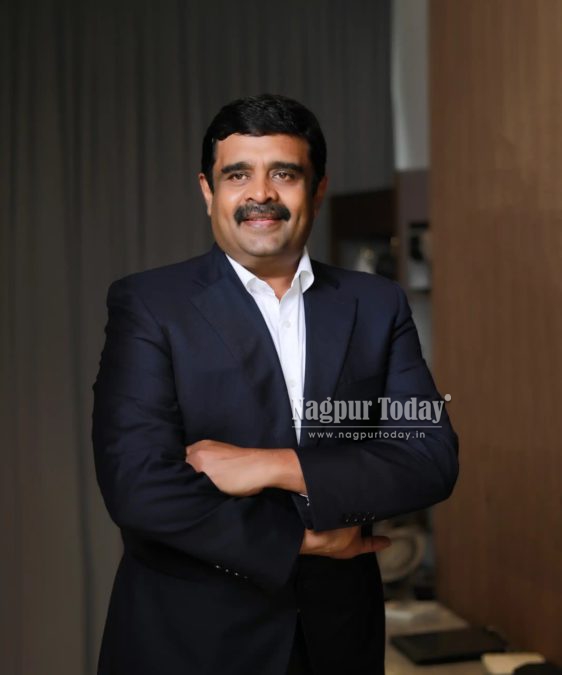
In the industrial history of India’s tribal belts, the traditional Corporate Social Responsibility (CSR) model has often been a series of disconnected gestures, brief interventions that fail to alter a region’s long-term trajectory. B Prabhakaran, the Managing Director of Lloyds Metals, learned the limitations of this “charity-first” approach the hard way. Early in his three-decade career, he realised that the quality of the ore does not just dictate a mining project’s success, but also the resilience of the community living above it.
Through the Lloyds Infinite Foundation (LIF), he has pivoted toward a “Structural Development Framework.” For B Prabhakaran, social investment isn’t about flowery sentiments; it is about engineering stability. It is the realisation that a multi-billion-dollar industrial ecosystem in Gadchiroli cannot thrive in a vacuum. It requires a local population that is technically skilled, educationally empowered, and physically healthy.
Gold Rate
Mar 24,2026 - Time 10.30Hrs

The Educational Pivot: From Literacy to Global Technical Sovereignty
Early in the Surjagarh project, B Prabhakaran identified a systemic failure: local youth were often relegated to unskilled roles because the existing educational infrastructure didn’t meet industrial standards. The “unpolished” truth was that basic literacy wasn’t enough to build a career in a modern, mechanised mine.
- Foundational Excellence: Lloyds Raj Vidya Niketan
The centrepiece of this educational correction is Lloyd’s Raj Vidya Niketan. Rather than building a temporary learning centre, the foundation established a permanent, CBSE-standard institution.
- Addressing the Gap:Most students here are first-generation learners. By providing a high-quality environment early on, the school ensures that a child’s starting point in a remote village does not dictate their finish line in the professional world.
- Focus on Values:The curriculum integrates English fluency with local cultural respect, ensuring students grow into roles with both technical competence and community integrity.
- The Curtin University Bridge
Perhaps the most ambitious aspect of the B Prabhakaran success story is the recognition that talent in the tribal heartlands deserves global exposure. To bridge the opportunity gap, LIF established a sponsorship program for higher education at Curtin University.
This is a strategic talent pipeline. By exposing tribal students to international mining and engineering standards in Australia, the foundation is creating leaders who can lead the next generation of carbon-smart operations back home in Maharashtra.
Engineering Health: Building a “Health Grid” in Gadchiroli
In the remote forests of Vidarbha, healthcare has historically been a matter of distance and desperation. B Prabhakaran’s approach through LIF wasn’t just to hold periodic medical camps, but to build a reliable and accessible healthcare infrastructure.
- The Grounded Reality:LIF has facilitated over 111,000 OPD consultations across its network. In 2023, the foundation established the Lloyds Kali Ammal Memorial Hospital in Hedri, which now serves 100–150 patients daily.
- Tertiary Care Expansion:The framework is currently scaling up to include super-specialty facilities, including a Cath Lab and advanced cardiac theatres.
- The Logic:For a systems thinker, a healthy community is a stable one. By providing free surgeries, diagnostic care, and 24/7 ambulance services, the foundation has reduced the socio-economic shocks that health crises often cause in tribal families.
Economic Integration: The Skilling-to-Sovereignty Pipeline
A recurring mistake in rural CSR is training people for abstract roles. B Prabhakaran corrected this by aligning the foundation’s skilling programs directly with the operational needs of the Thriveni Group and Lloyds Metals.
- Technical Mastery:Through foundation-supported vocational centres, youth are trained on sophisticated heavy-machinery simulators.
- The Result:Local tribal youth, who may have previously been limited to subsistence farming, are now specialised operators of 300-tonne dump trucks and electric shovels. This transition represents a fundamental shift in family income and regional stability.
- Women’s Empowerment:The Lloyds Vanya Garment Centre is another practical lever. By training over 200 women from 32 villages, LIF has enabled them to produce over 40,000 garments in nine months, turning rural women into earners and entrepreneurs.
Environmental Stewardship: Infrastructure as a Social Tool
With a mining lease extending to 2057, B Prabhakaran views environmental care as a non-negotiable part of the social contract.
- The Slurry Pipeline Solution:The 87km iron ore slurry pipeline is the ultimate “Zero-Diesel” success story. It removes thousands of heavy trucks from public roads, which reduces dust and accidents—a primary concern for local villagers.
- Reforestation and Water:The foundation is currently planting 11 lakh trees and has rejuvenated ponds in Manger and Hedri. These aren’t just “green” projects; they are water-security projects for the local farmers who coexist with the mine.
The Enduring Industrial Blueprint
The work of the Lloyds Infinite Foundation is a testament to what happens when an industrialist stops looking at CSR as a “charity” and starts looking at it as a “structural requirement.” B Prabhakaran hasn’t just built a support system; he has built a framework for regional sovereignty.
By focusing on Lloyds Raj Vidya Niketan, international degrees at Curtin University, and a Zero-Diesel roadmap, he is proving that the “Hard Way”, the path of deep, structural integration, is the only way that lasts. In the new India, mining isn’t just about the ore in the ground; it’s about the dignity and potential of the people living above it.